
Thermogenic mechanisms
The Mechanism of Thermogenesis: How Fat-Burning Pathways Actually Work
A practical editorial guide to thermogenesis, metabolic signaling, and how today’s most discussed fat-burning agents are positioned in real-world routines.
Thermogenesis remains one of the most talked-about ideas in the fat-loss space, but the term is often used too loosely. In practice, thermogenesis is not a single magic switch. It is a coordinated physiological process involving neural signaling, hormonal responses, mitochondrial activity, and the way the body handles stored and incoming energy.
That is why the most useful question is not whether a product “burns fat fast,” but how it may fit into a broader routine built around cellular energy handling, evidence quality and tolerability, and real-life adherence.
In this article
Quick thesis
Thermogenesis is best understood as supportive biology, not instant transformation. The most useful products and strategies are the ones that fit the larger metabolic picture instead of promising a shortcut.
What thermogenesis really means
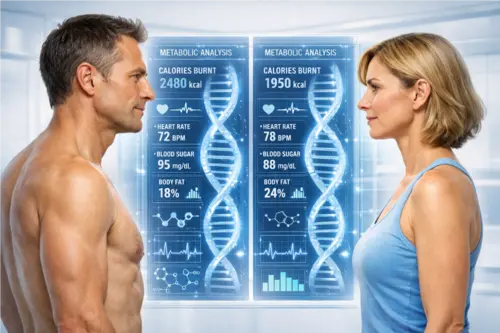
Thermogenesis refers to the production of heat through metabolic activity. In fat-loss discussions, it is usually framed as increased energy expenditure, but the underlying biology is more nuanced than marketing language suggests. Thermogenic processes involve communication between the nervous system, hormones, mitochondria, and tissues that regulate fuel use.
In practical terms, this means the body can shift how efficiently it uses energy, how strongly it responds to food intake, how it handles stored fuel, and how much “cost” is associated with maintaining normal physiology. That is why thermogenesis is relevant, but rarely sufficient on its own. It is one part of a larger metabolic picture that also includes appetite control, sleep quality, insulin dynamics, activity levels, and routine consistency.
Readers who explore fat burners through this lens usually end up asking better questions. Instead of looking only for the strongest sensation, they begin to compare formulas by mechanism fit, tolerability, and how realistically the product can support a calorie-aware routine.
| Thermogenic layer | What it influences | Why it matters |
|---|---|---|
| Neural signaling | Energy mobilization and stimulation response | Helps explain why some agents feel more immediate than others |
| Mitochondrial activity | Cellular energy conversion | Often sits behind “metabolic support” narratives |
| Hormonal modulation | Appetite, fuel use, and systemic balance | Influences whether a formula feels sustainable in practice |
| Behavioral support | Routine adherence and daily compliance | Often matters more than a dramatic short-term sensation |

Cellular and biochemical foundations
At the cellular level, thermogenesis is closely tied to mitochondrial function and substrate oxidation. This is one reason contemporary metabolic products are increasingly framed around energy handling, oxidative balance, and nutrient utilization rather than around crude “fat melting” language. The body is not just burning more heat in isolation; it is managing how fuel is processed, stored, and used across multiple systems.
Key metabolic agents may influence this process indirectly through neurotransmitter availability, enzymatic pathways, nutrient transport, or support mechanisms associated with appetite and energy regulation. That does not mean every agent works the same way or deserves the same expectations. Bioavailability, formulation logic, and the individual user’s physiology all influence whether a thermogenic-support concept translates into anything meaningful.
This is exactly why the best discussions around thermogenesis now focus on context. A formula that makes sense for a stimulant-tolerant daytime user may not be the right fit for someone whose real issue is nighttime cravings, poor sleep, or appetite instability during a calorie deficit.
Mechanism matters
Mitochondrial support, mild thermogenic signaling, appetite control, and glucose handling are related but not interchangeable pathways.
Dose and fit matter
The effectiveness of any agent depends on dosage, formulation coherence, and whether it fits the user’s routine and tolerance profile.
Context still matters most
Sleep, movement, protein intake, stress, and meal structure still decide whether a thermogenic product feels useful in practice.
How thermogenic agents should be evaluated
Evidence-based evaluation of thermogenic agents requires more than asking whether a product sounds strong. A more useful framework considers whether the formula is positioned around a recognizable metabolic goal, whether its ingredients logically support that positioning, and whether the expected use case feels compatible with real-world adherence.
This is where many products separate themselves. Some are best understood as appetite-support tools. Others sit closer to metabolic or mitochondrial narratives. Some fit glucose-conscious routines, and others are more relevant to sleep-related fat-loss behavior. Serious evaluation filters claims through mechanism, safety, tolerability, and the kind of user the formula may realistically suit.
A practical review framework should ask:
- Mechanism fit: what specific type of support is the formula trying to provide?
- Tolerability: is the product likely to feel sustainable or disruptive?
- Use-case clarity: is it built for appetite control, energy support, glucose-conscious routines, sleep-first routines, or something broader?
- Commercial coherence: does the product’s positioning make sense, or is it relying mostly on exaggerated language?
Translating thermogenesis science into application
From a practical standpoint, thermogenic strategies should be viewed as supportive rather than deterministic. Sustainable metabolic optimization still depends on alignment between nutrition, physical activity, sleep quality, appetite management, and individual physiology. A formula can help, but it does not replace the conditions that make fat loss viable.
This is why the smartest readers usually do not ask only whether a thermogenic product “works.” They ask whether it fits their routine, whether it supports their weakest point, and whether it can be used without creating a harder overall environment. For one person that may mean a smoother metabolism-support formula. For another it may mean a more appetite-focused or timing-sensitive product.
Scientific rigor, cleaner buying paths, transparent positioning, and realistic expectations remain the most useful criteria when assessing any metabolic intervention.
Ready to compare thermogenesis-related options?
Browse the verified directory to compare categories, then come back to this guide to match each formula style with your routine and goals.
Editorial bottom line
Thermogenesis research continues to evolve in a more useful direction. The strongest conversations in 2026 are no longer built only around generalized “fat burning” claims. They are increasingly shaped by precision, personalization, tolerability, and clearer metabolic framing.
In other words, thermogenesis still matters, but it matters most when it is understood as one support layer inside a bigger system. That is the difference between reading marketing language and actually understanding how a formula may fit your life.
Scientific references and medical literature
Sources- ▸ Adipocyte CLDN5 promotes thermogenesis and energy expenditure
- ▸ Effects of nutrients and diet on mitochondrial dysfunction
- ▸ Sulforaphane restores mitochondrial β-oxidation
- ▸ Tissue-specific roles of fatty acid oxidation
- ▸ Astaxanthin alleviates oxidative stress and skeletal muscle lipid accumulation
Editorial Note: Some links on this page may earn us a commission at no extra cost to you.
Our reviews remain independent and evidence-based.