coffee add-ins • supplement delivery • bioavailability (editorial)
Liquid Drops vs. Powdered Coffee Additives: What Bioavailability Really Means for Metabolism Support (2026)
A practical, evidence-aware guide to supplement delivery: absorption pathways, first-pass metabolism, and what “faster uptake” can—and can’t—promise.
Why Coffee-Based “Metabolism Add-Ins” Became a Trend
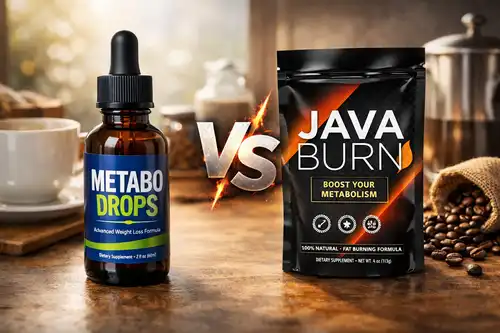
Coffee is a daily habit for many people, so adding a supplement to that routine is an easy compliance strategy. The important question is not just “what ingredients,” but how the formula is delivered: a powdered mix swallowed and digested vs. a liquid intended for oral mucosa exposure (buccal/sublingual) or standard swallowing.
Bioavailability 101: Digestion vs. Oral Mucosa Routes
Bioavailability is the proportion of a substance that enters systemic circulation and is available for physiological effect. With standard oral supplements, compounds are absorbed in the GI tract and may undergo first-pass metabolism (processing before broader circulation).
Powdered coffee additives (swallowed)
- Must dissolve and survive stomach/intestinal conditions
- Absorption can vary with meals, GI function, and formulation
- May be affected by first-pass metabolism depending on compound
Liquid drops (oral mucosa exposure)
- Some products are designed for buccal/sublingual contact
- Potentially faster uptake for certain compounds in some contexts
- Still constrained by molecule size, permeability, and formulation limits
Why Powdered Additives Can Feel “Inconsistent”
With swallowed powders, the user experience can vary because absorption is influenced by food timing, stomach acidity, and compound stability. This is especially relevant for plant polyphenols, which frequently have complex metabolism and variable oral bioavailability. Source (PMC)
Translation for consumers: if a product’s effects feel “all over the place,” the delivery route and conditions (fed vs fasted) might be a factor, not just the ingredient list.
Liquid vs. Powder: Practical Comparison (No Hype)
| Criteria | Liquid drops | Powdered coffee additives |
|---|---|---|
| Onset (perceived) | May feel faster for some users in some contexts | Often slower (digestion-dependent) |
| Consistency | Can still vary (compound/formulation dependent) | Can vary with meals, GI factors, dissolution |
| First-pass exposure | May be reduced in certain buccal/sublingual designs | Typically exposed (standard oral route) |
| Best consumer framing | “Delivery option that may improve convenience/uptake in some cases” | “Standard route; evaluate label transparency and tolerance” |
Where to Buy Safely: Reduce the Real Risks First
The biggest consumer risk isn’t “drops vs powder”—it’s contamination, hidden drug ingredients, and misleading claims. The FDA maintains public notices for weight-loss products found to contain hidden ingredients. FDA notices
- Clear Supplement Facts panel (no vague proprietary blends)
- Real cautions/contraindications listed
- Official pages you can verify (avoid random marketplace resellers)
- No “instant weight loss” promises
References
Primary sources: FDA / PubMed / PMC
Editorial Note: Some links on this page may earn us a commission at no extra cost to you.
Our reviews remain independent and evidence-based.